Scorpions Of Lowveld

Identification & First Response Guide by Jonathan Leeming

These pages offer an identification guide and a first response guide to scorpions of the Lowveld areas of Southern Africa. This guide aligns to the contents of the Essential Scorpion Sting First Response Book and Course. Use these resources and share them with your organisation or  local community. Use them as a reference in your time of need.
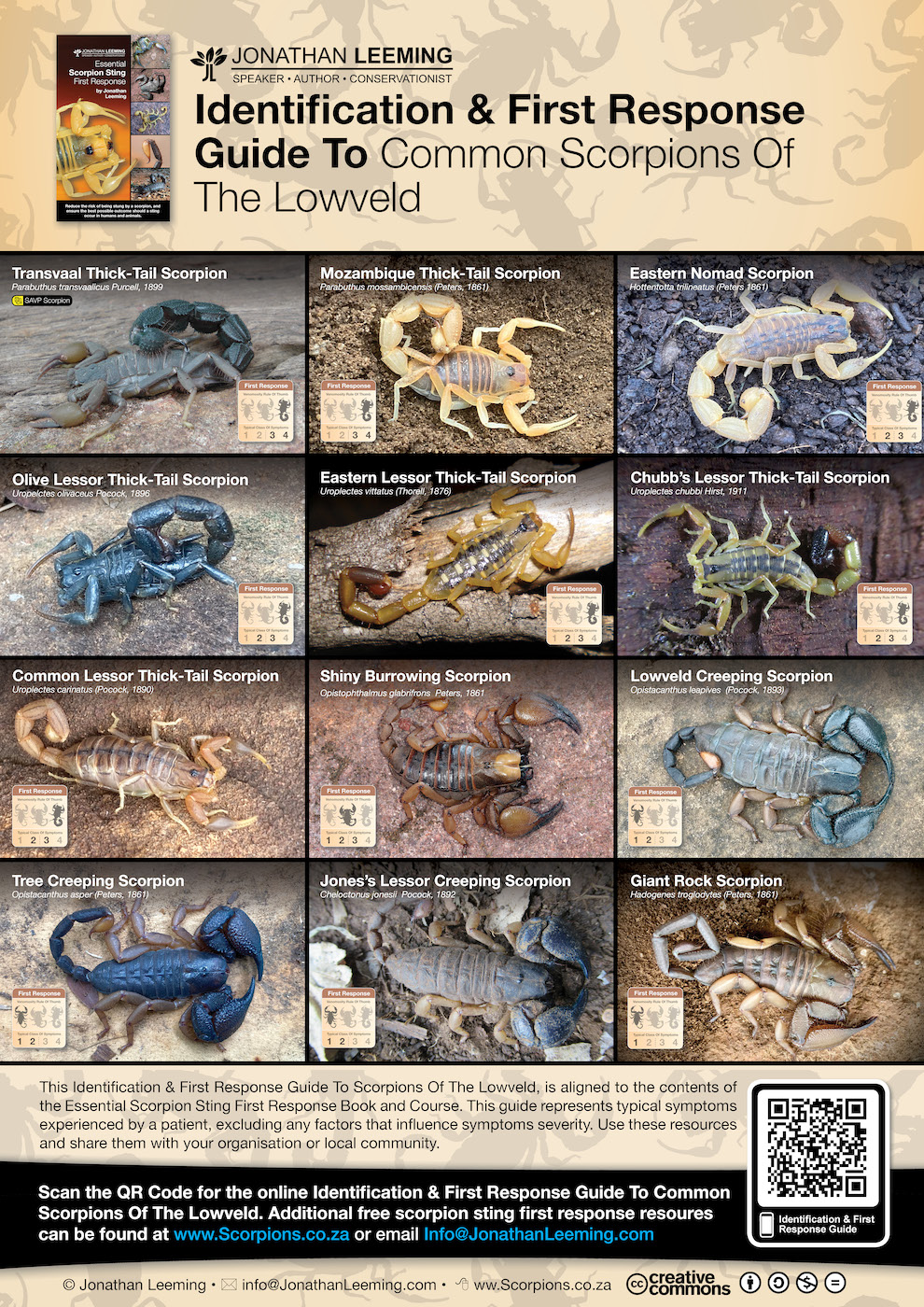
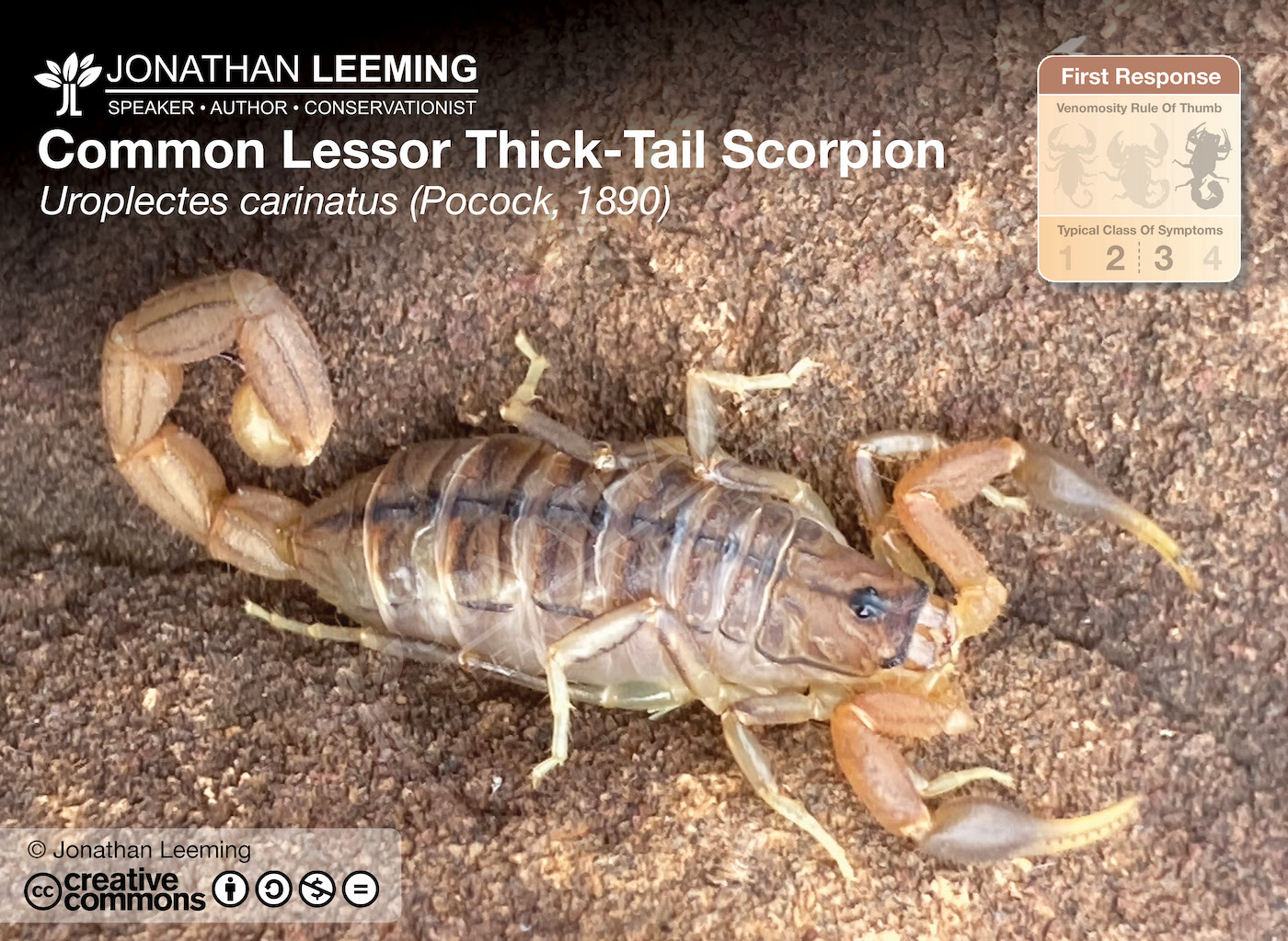
Common Lessor Thick-Tail Scorpion

The Common Lessor Thick-Tail Scorpion (Uroplectes carinatus),  is a small scorpion with an average length between 25mm to 40mm in length. Overall coloration is variable though tout it’s range by generally orange-brown. Dark line on the middle of the tergites. the sting is lighter in colour. and no subaculeur tubercle.

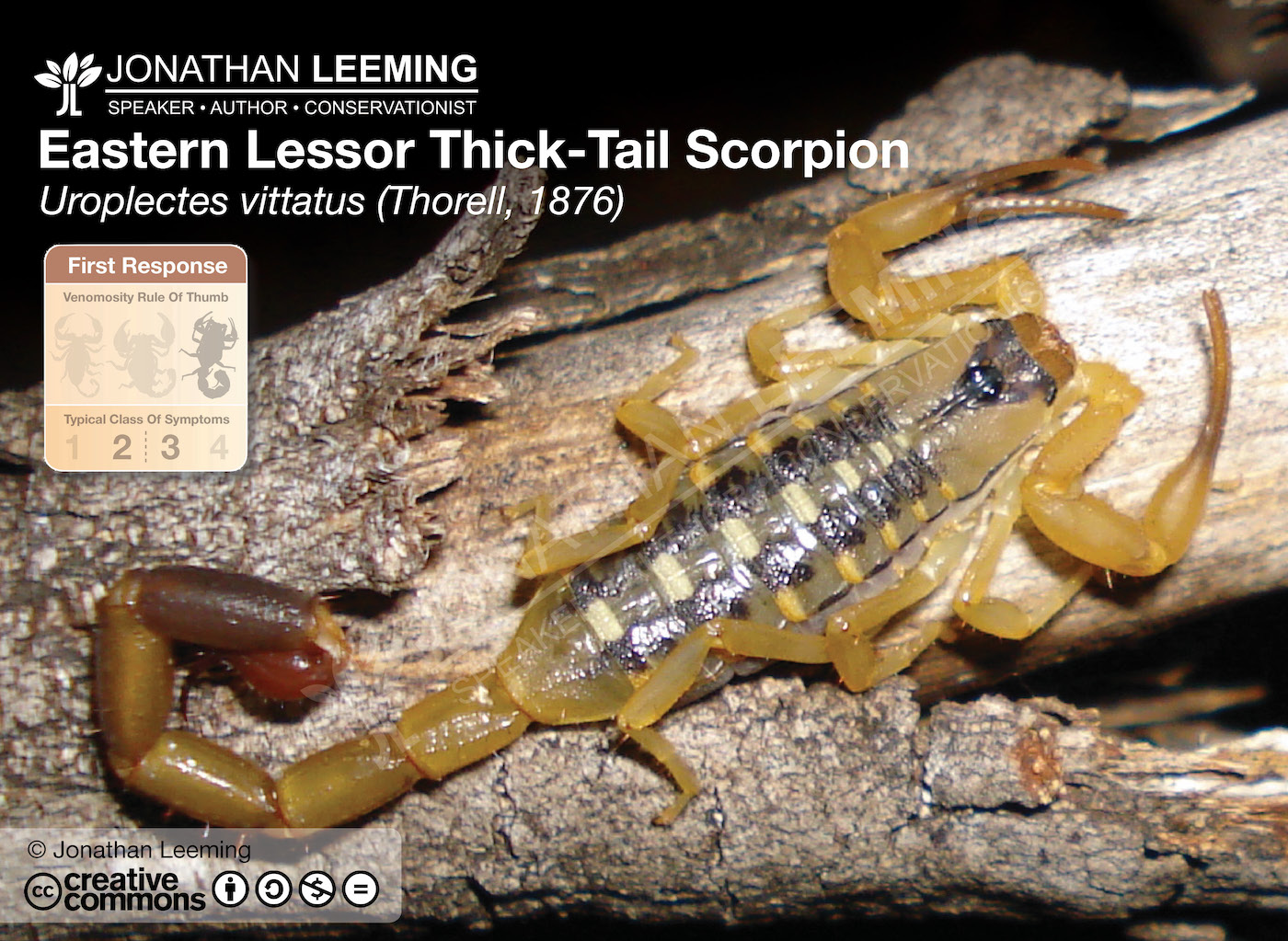
Eastern Lessor Thick-Tail Scorpion

The Eastern Lessor Thick-Tail Scorpion (Uroplectes vittatus), is a small scorpion with an average length between 40mm and 50mm in length. Light-brown with a pale stipe down the centre of the tergites. Last 2 tail segments are darker in colour. Characteristic dark triangle on the carapace.

Giant Rock Scorpion

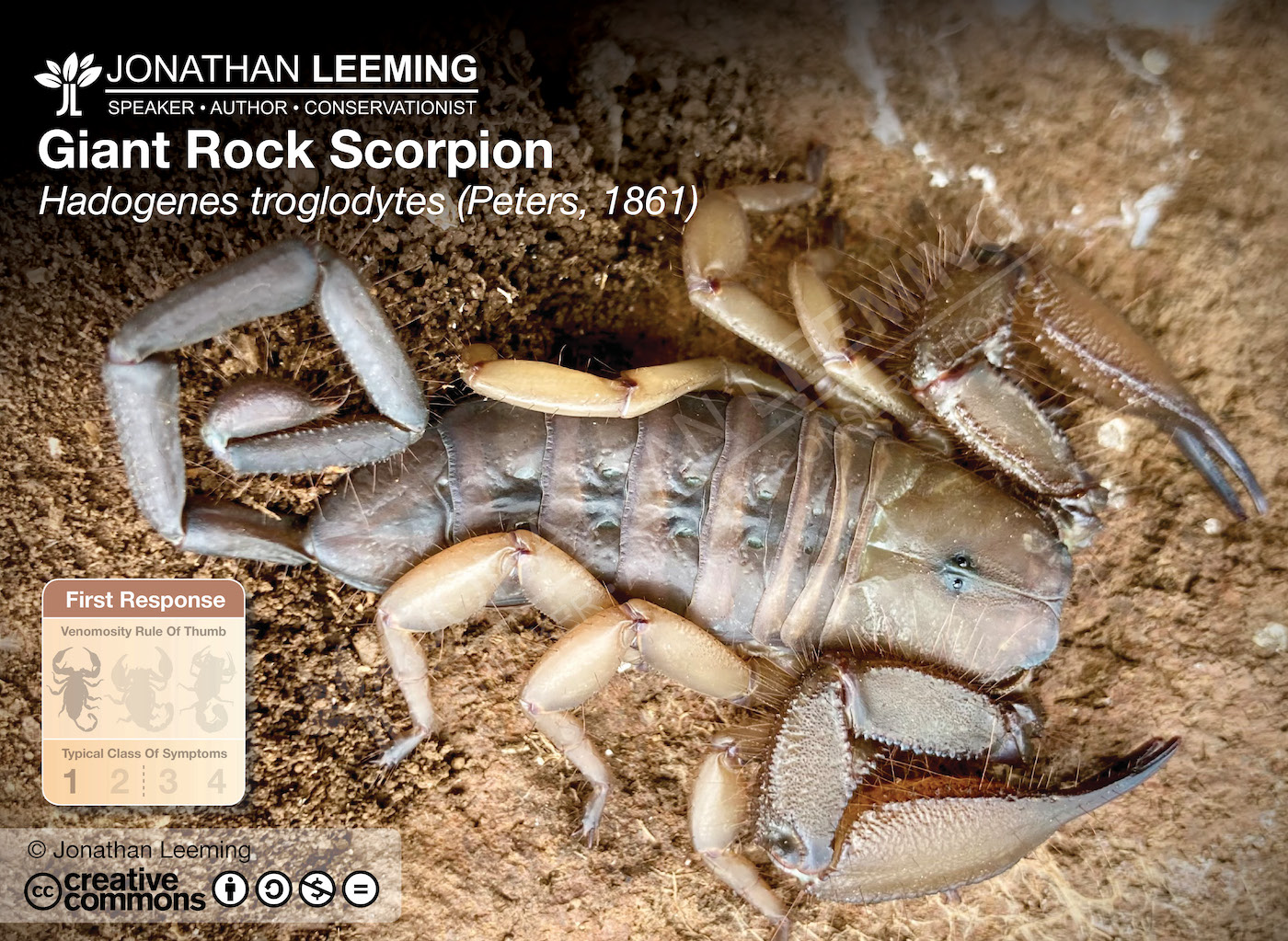
The Giant Rock Scorpion (Hadogenes troglodytes), is the longest scorpion in Southern Africa attaining a length of 130mm to 150mm in length. Males have longer tails than females and attaining a length of 190mm. Found on rocky ridges and outcrops where stye shelter in cracks of rocks or where 2 rock form a narrow crack.

Jones's Lessor Creeping Scorpion

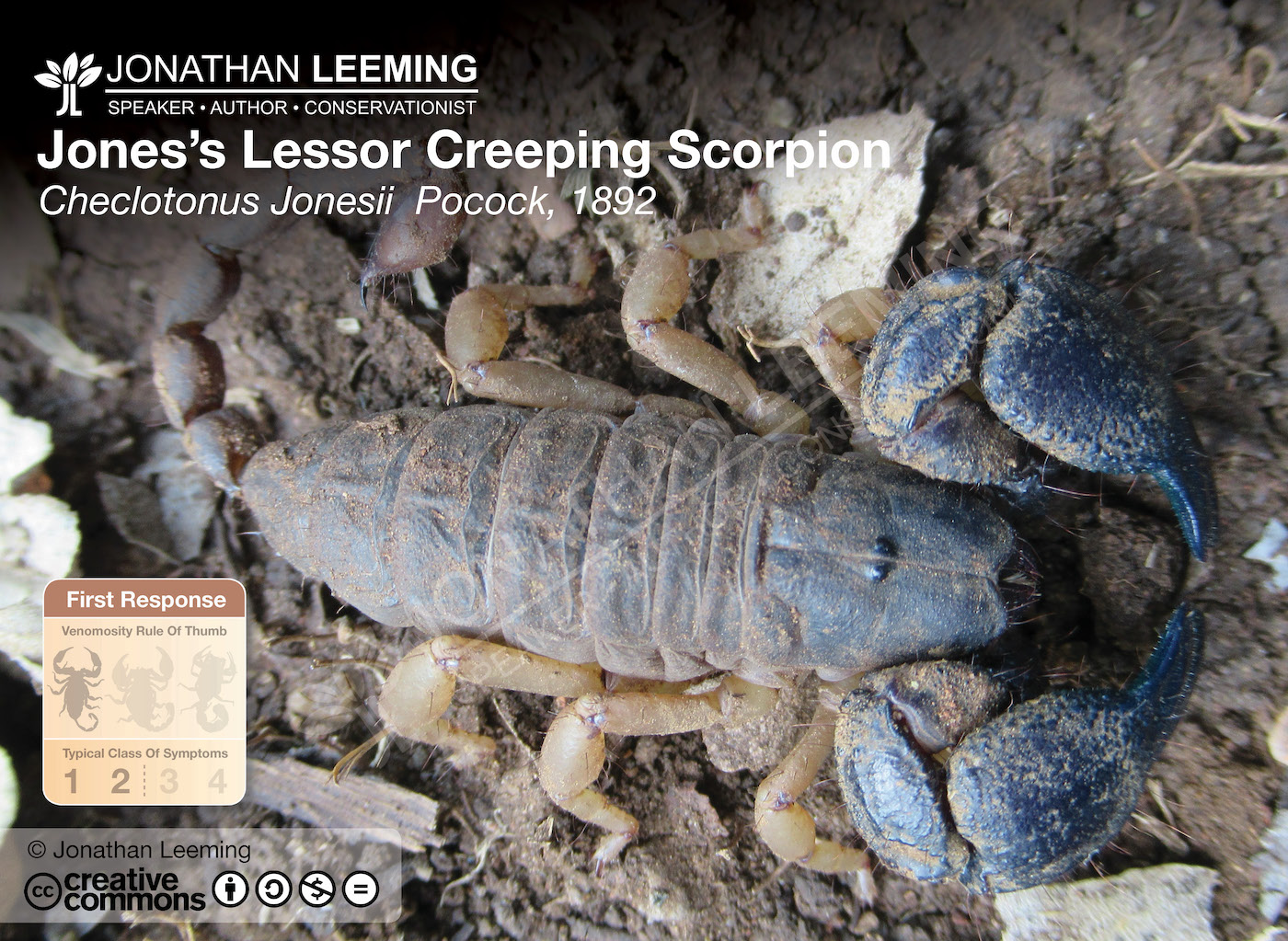
The Jones’s Lessor Creeping Scorpion (Chelectonus jonesii) is a medium sized scorpion, average 50mm to 60mm in length, attaining 70mm in some areas.  Colouration rangers from overall black, to dark brown with slightly lighter legs. They construct a near vertical burrow up to 21cm in depth in hard soils.

Lowveld Creeping Scorpion

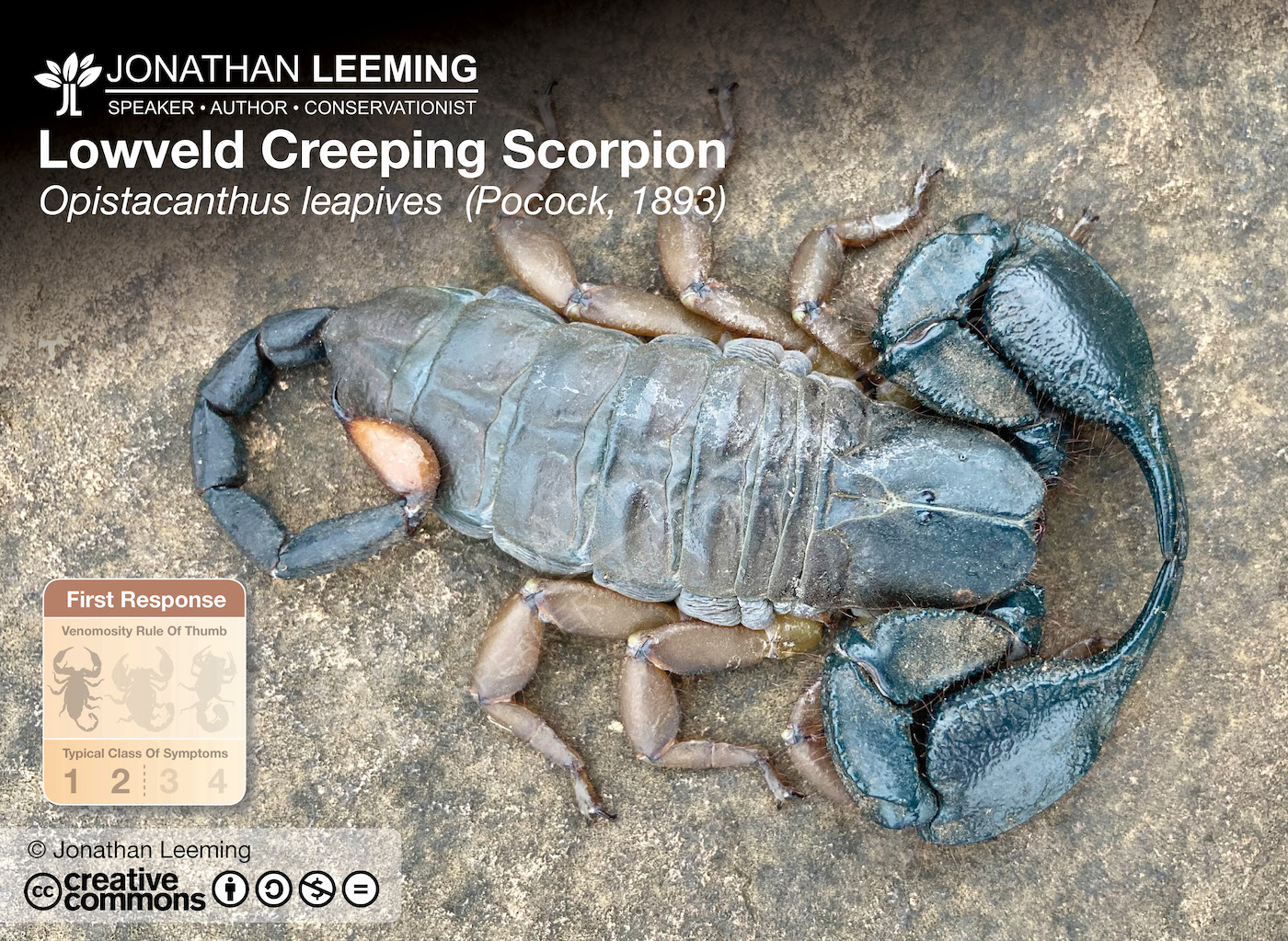
The Lowveld Creeping Scorpion (Opistacanthus leavipes) large scorpion with an average length of 90mm to 100mm.  Legs and sting are a lighter colour than the body. Pincers are smooth in texture. Found in rocky areas where they shelter between 2 rocks or in a rock crack.

Mozambique Thick-Tail Scorpion

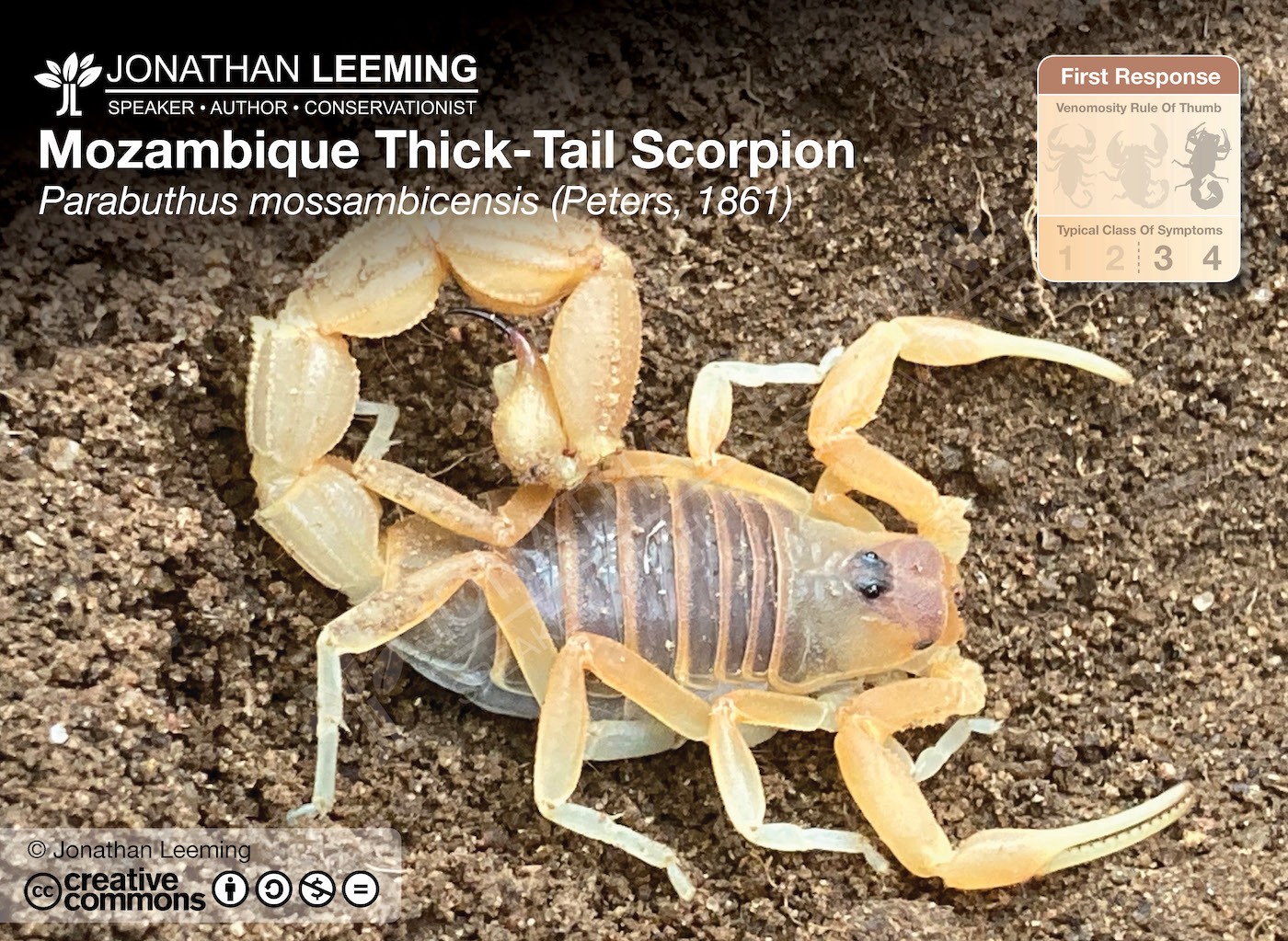
The Mozambique Thick-Tail Scorpion (Parabuthus mossambicensis), is a medium scorpion with an average length of 60mm to 70mm in length. Overall orange to orange-brown in coloration. Tail segments will granular keels. Prefers flat areas where it shelters under surface debris such as rocks and logs.

Olive Lessor Thick-Tail Scorpion

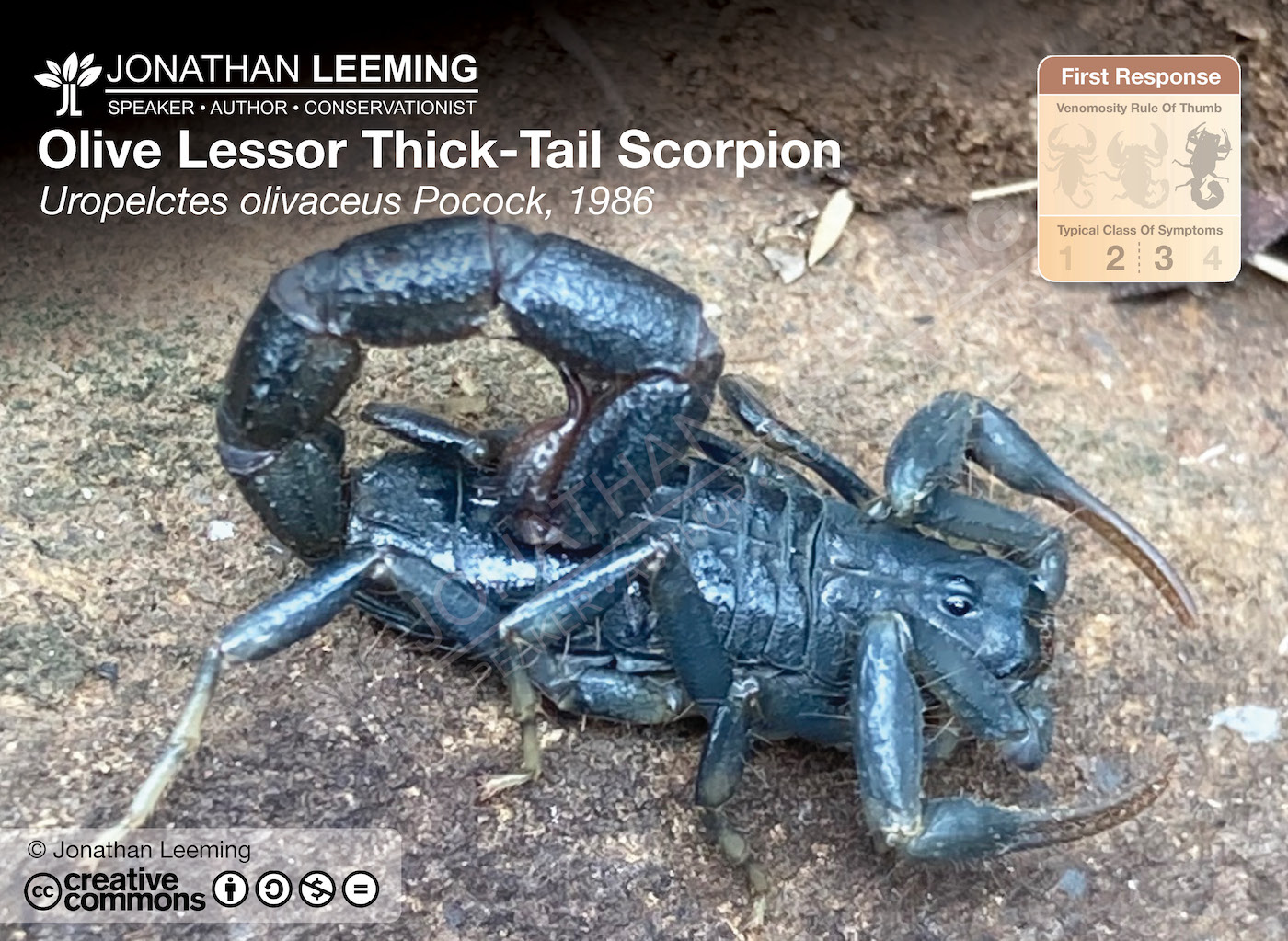
The Olive Lessor Thick-Tail Scorpion (Uroplectes olivaceous), is asSmall scorpion with an average length between 40mm to 50mm in length. Overall olive-green in colouration. The fingers on the pincers are lighter in colour, legs characterised by light and dark bands. Last 2 tail segments are granular in texture. Subaculeur tubercle is present.

Peglar's Pygmy Thick-Tail Scorpion

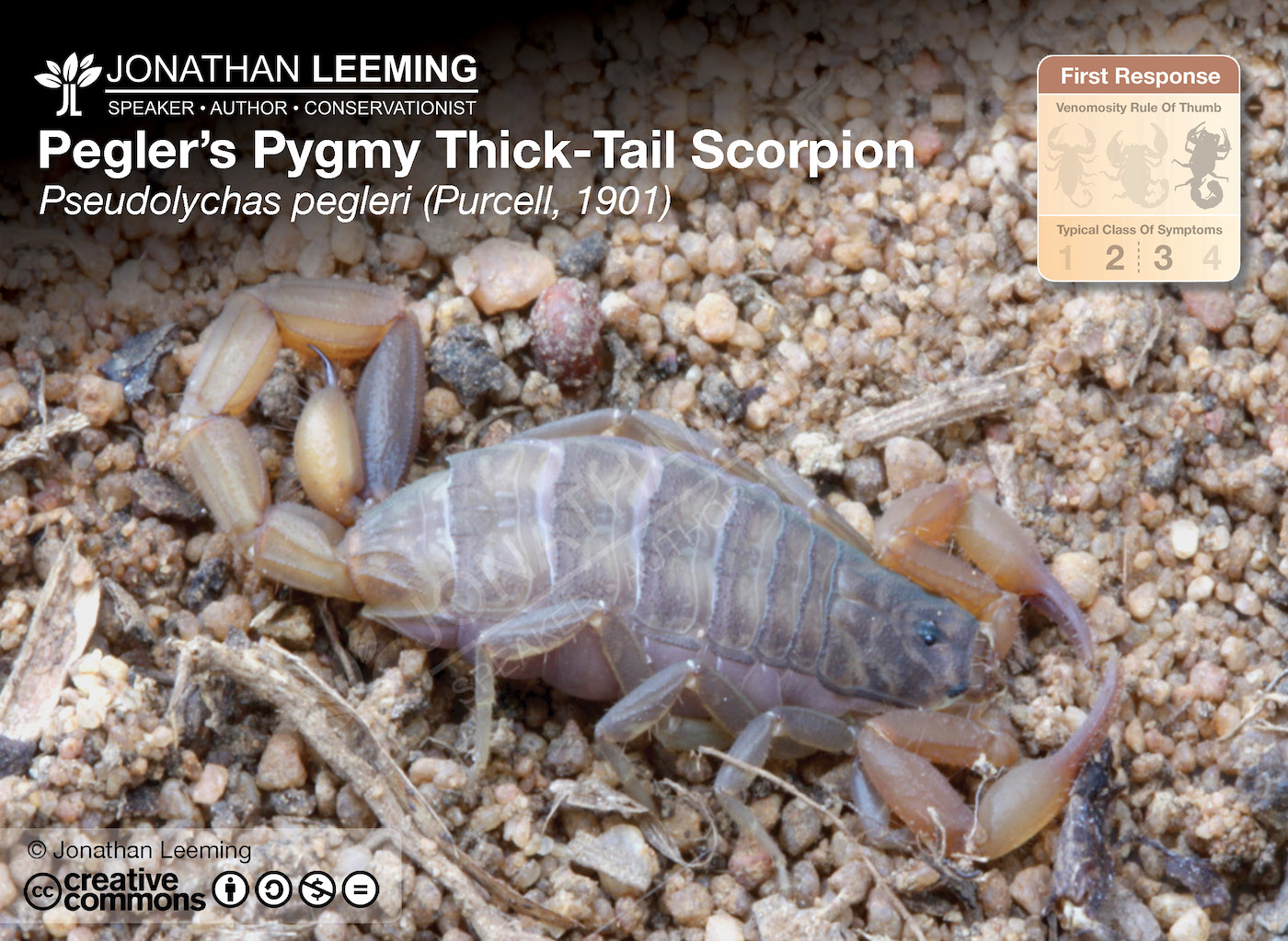
The Peglar’s Pygmy Thick-Tail Scorpion (Pseudolychas peglari) ( is a small scorpion wi th an average length about 25mm. Overall colouration dark-brown to reddish-brown throughout it’s range. Shape of venom vesicle is characteristic being large with a short recurved sting. 

Shiny Burrowing Scorpion

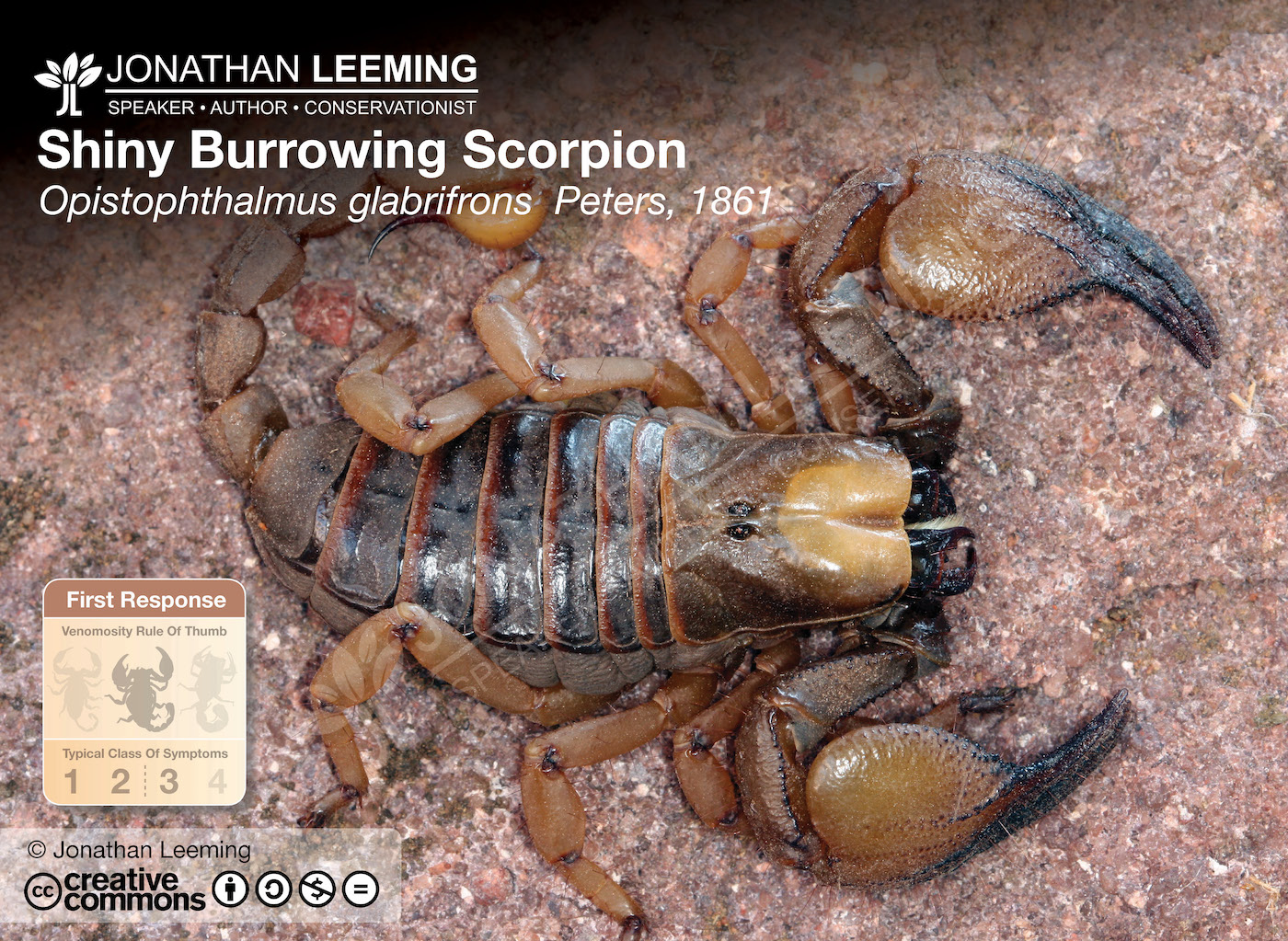
The Shiny Burrowing Scorpion (Opistophthlamus glabrifrons) Large scorpion with an average length of 70mm to 100mm, reaching up to 140mm in parts of its range. This widely distributed scorpion varies in size and colouration throughout range. Colouration ranges from orange to orange brown in colouration to darker forms.

Transvaal Thick-Tail Scorpion

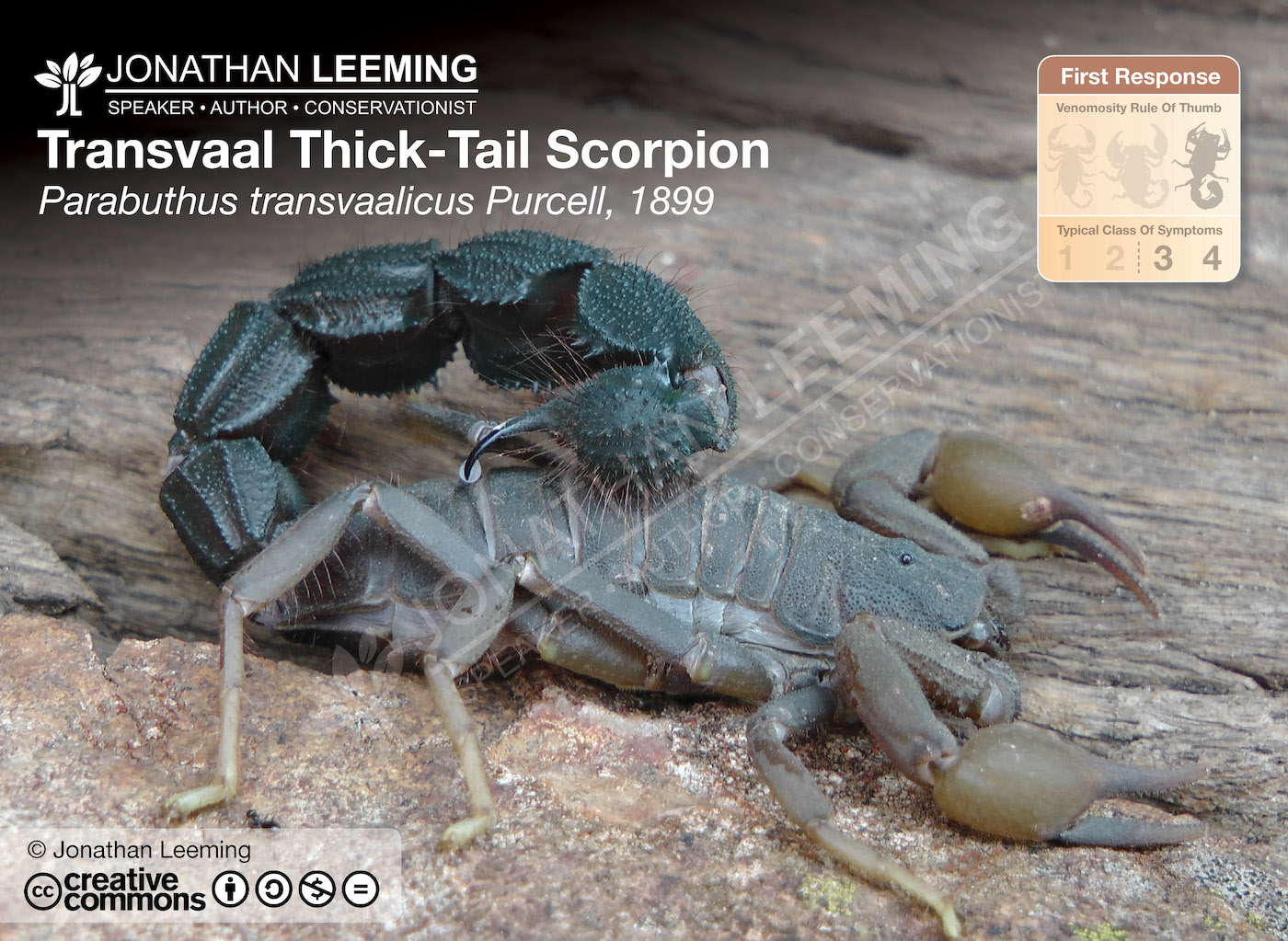
The Transvaal Thick-Tail Scorpion (Parabuthus transvaalicus), is a large scorpion with an average length between 80mm to 100mm in length, reaching 120mm in some areas. Overall charcoal-black to greyish brown, the carapace is granular in texture. Legs are lighter in colour towards the extremities.

Tree Creeping Scorpion

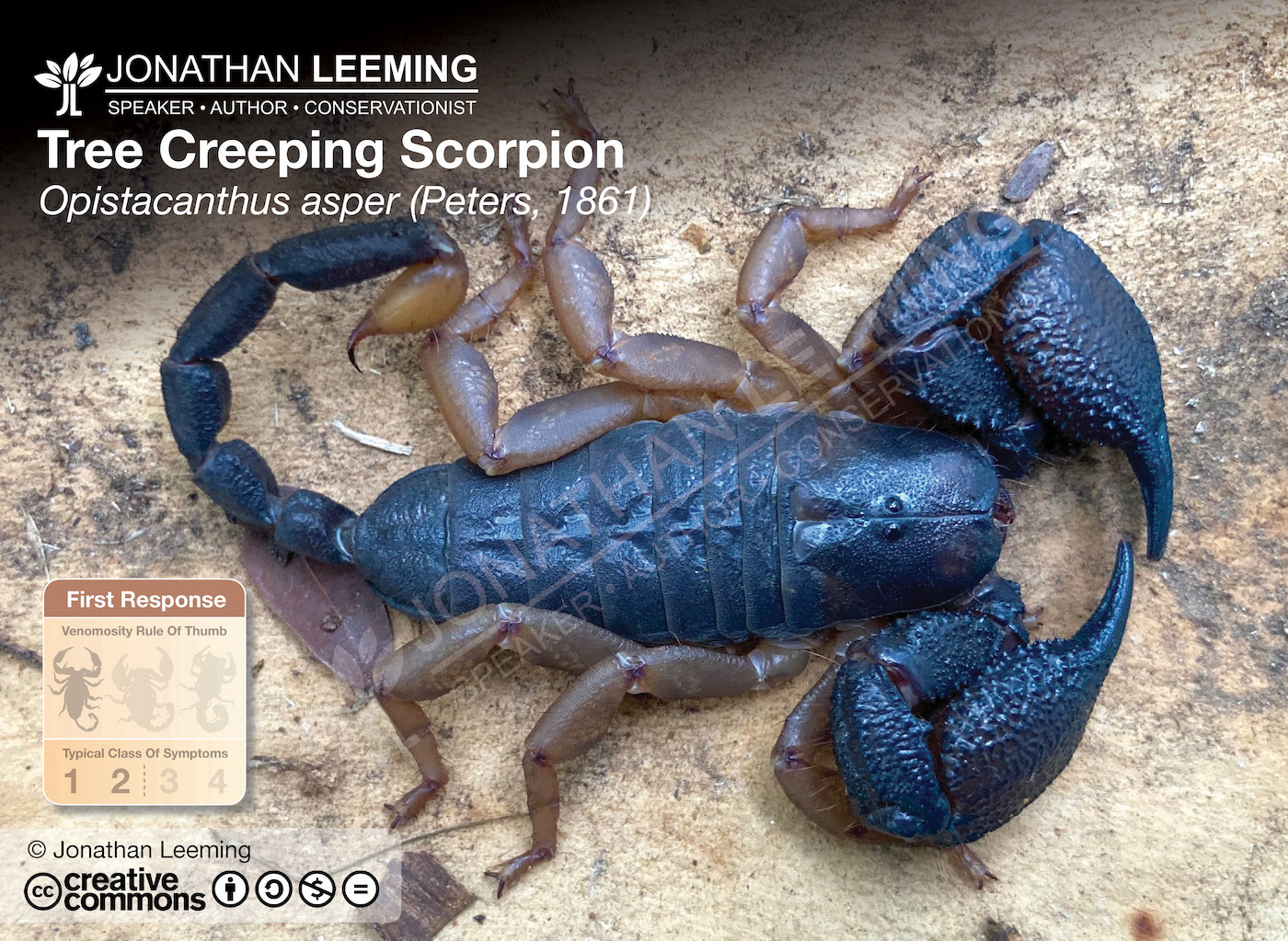
The Tree Creeping Scorpion (Opistacanthus asper), is a medium sized scorpion, average 65mm to 85mm in length, attaining 70mm in other areas. Colouration black with pale legs and sting. Asper refers to the course granulations on the pincers. A very common scorpion, they shelter off the ground in cracks in trees, under loose bark.

Support my work and purchase a copy my
Essential Scorpion Sting First Response Book

This book represents a giant leap forward in our understanding of scorpions and scorpion stings in southern Africa. It offers a new and innovative first response framework that is based upon the latest science, is easy to understand and put into practice. This book is an upgrade on our current understanding of scorpions and scorpions stings as it offers a refreshingly new perspective on a familiar subject that is in desperate need of updating.

Show Me More
member of the

I'm on a mission to reduce the burden of spider bites and scorpion stings across Southern Africa!
NewsletterPublic Events | Books & Workbooks | Presentations | Activities |Professional Development |  Shop